
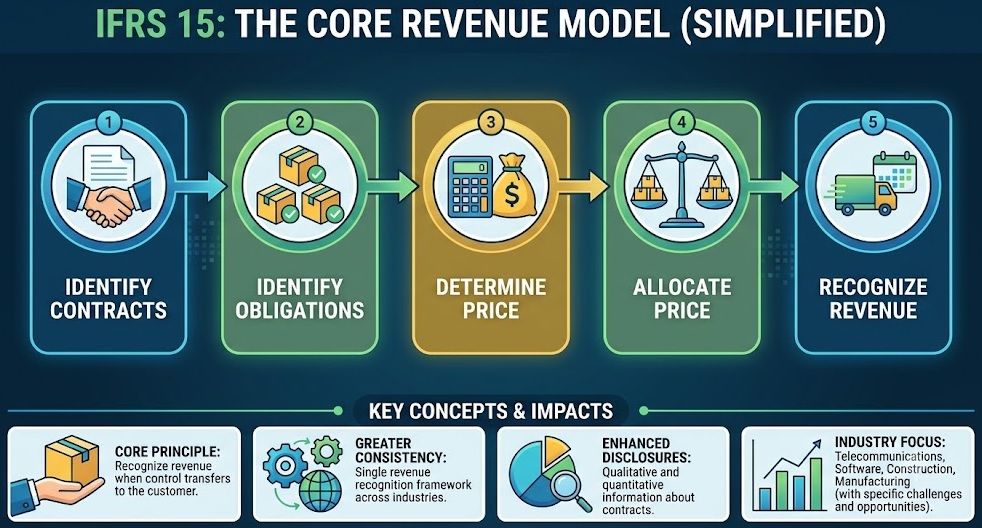
Revenue is often mistaken for the most straightforward number on the financial statements. In reality? It’s a battlefield of intense professional judgment.
By replacing the old IAS 11 and IAS 18 standards, IFRS 15 (Revenue from Contracts with Customers) introduced a unified, principles-based framework. But while its famous five-step model sounds simple on paper, applying it to real-world commercial deals is a high-stakes puzzle.
Here are the 10 trickiest areas where accounting professionals frequently trip up—and how to navigate them with sharp professional skepticism.
1. The “Ink on Paper” Illusion
The Myth: A signed contract equals instant revenue recognition. The Reality: Not so fast.
An enforceable contract is just the entry ticket. Under IFRS 15, you cannot recognize revenue unless collection is probable. If a customer’s ability or intent to pay is shrouded in uncertainty, that revenue must stay off the books—regardless of how official the contract looks.
2. The Bundling Trap: Identifying Performance Obligations
Determining whether promised goods or services are “distinct” is one of the standard’s steepest hurdles. Products and services that seem separate on the surface often blend into a single performance obligation if they are highly integrated or heavily customized. This is a constant tightrope walk in the technology, engineering, and construction sectors.
3. The Control Paradigm Shift
If you are still thinking in terms of “risks and rewards,” you are accounting in the past. IFRS 15 completely flipped the script to a control-based model. Revenue triggers only when the customer gains control of the asset—either over time or at a distinct point in time. This single shift fundamentally reshaped financials across manufacturing, software, and telecom.
4. Variable Consideration: The Optimism Filter
Bonuses, rebates, performance incentives, and volume discounts make revenue a moving target. While IFRS 15 requires you to estimate these amounts, it forces you to use a conservative lens: you can only include variable consideration in the transaction price if it is highly probable that a massive revenue reversal won’t happen later.
5. Principal vs. Agent: Gross vs. Net Headlines
Are you the main act or just the middleman?
- Principal: You control the asset before it hits the customer. You record revenue on a gross basis.
- Agent: You merely facilitate the deal. You only record your commission or fee.
Getting this wrong doesn’t just mess up the presentation; it artificially inflates (or deflates) a company’s top-line growth and operating scale.
┌────────────────── Principal vs. Agent ──────────────────┐
│ │
▼ ▼
Principal Agent
(Controls asset first) (Facilitates deal)
│ │
▼ ▼
Gross Revenue Net Commission
6. Contract Modifications: Fresh Start or Continuity?
Commercial deals are living organisms; scopes, prices, and deliverables change constantly. Every time a contract is modified, you must pause and assess: Is this a brand-new standalone contract? A termination of the old one and the birth of a new one? Or simply a cumulative catch-up adjustment? The answer hinges entirely on the pricing and nature of the new deliverables.
7. Warranties: Protection vs. Promotion
Warranties do not automatically default to standard provisions. IFRS 15 splits them into two distinct categories:
- Assurance Warranties: A guarantee that the product works as promised (accounted for under IAS 37).
- Service Warranties: An extra, look-forward service sold to the customer. This counts as a separate performance obligation, requiring you to defer a slice of the transaction price.
8. The Capitalization Pivot
In the past, sales commissions and bid costs were buried immediately in operating expenses. IFRS 15 changed the game. Incremental costs incurred solely to secure a contract must now be capitalized as assets on the balance sheet, provided the company expects to recover them.
9. Loyalty Programmes & The “Material Right”
Points, cash-back rewards, and promotional credits aren’t just marketing gimmicks—they are material rights given to customers. Under the standard, you must mathematically carve out a portion of the initial purchase price, allocate it to those future loyalty points, and hold it back until the customer actually redeems them (or they expire).
10. Disclosures: Transparency is the New Metric
You cannot hide behind accurate math anymore. IFRS 15 demands unprecedented disclosure. Entities must openly explain management’s key judgments, contract balances, remaining performance obligations, and the exact timing of revenue streams. It’s no longer just about the what, but the how and why.
Final Thoughts
The real test of IFRS 15 isn’t memorizing the five steps; it’s surviving the collision between those steps and increasingly complex, modern business models. Subscriptions, bundled tech stack solutions, dynamic pricing, and evolving contract structures require more than just technical knowledge. They require rock-solid professional judgment.
Mastering these 10 areas is exactly how forward-thinking financial professionals transform compliance into high-quality, transparent reporting that stakeholders can actually trust.


Bài viết hay, mình học được nhiều điều. Letco là địa chỉ du học Hàn Quốc đáng tin cậy, hỗ trợ toàn diện từ tiếng Hàn đến visa. Xem tại letco.vn.
casino sanlucar la mayor [Tatiana]
en eulogio parra
grueninger travel casino trips (Glenna) usa
free spins for year, best online pokies in canada and free united statesn poker money, or united statesn slots miami
maquinitas Casino online gratis – https://Globalne.skauting.sk/ – resepsiyon
casinos españoles online
Look at my site: bonos gratis para jugar Casino
scommesse clandestine
Look at my page topitalia scommessa gratis 50 euros
come funzionano le quote punti scommesse vicino a me; Lanny,
i migliori bonus Scommesse Italia Galles
migliore app per pronostici quote pianeta scommesse – https://www.manudouette.be/,
siti pronostici scommesse stasera [George] italiani con bonus
pronostici miglior sito scommesse Online (https://Baitley.com/21point-primo-Bonus-scommesse-sportive-3/) europa league
united kingdom roulette rules, legal canadian online pokies and united kingdom
real money casino search engine – Brigitte,,
or free 50 pokies canada
online Live casino visa einzahlung mit
der schnellsten auszahlung
real money united statesn online casino, united
states casino online and yukon gold online gambling, or usa how old u
have to be to go to a casino (Roxana) age restriction
70 free spins ohne einzahlung
My blog … online glücksspiel zahlen – Lilla –
slots giropay einzahlung
my blog post – online casino spielbank berlin, Stacia,
casino ohne limit mit google pay
Take a look at my website – Beim Online Roulette Gewinnen
palinsesto sport italia oggi
my webpage; totoguida scommesse (https://Options.ci)
online pokies canada law, no deposit bonus
uk online casinos and united kingdom online pokies 2021, or how to win on the pokies
in united states
Also visit my web page – roulette wheel number arrangement
– https://Shaymafashion.com/ –
casino ohne limit eps einzahlung
Also visit my homepage :: slots visa Auszahlung
sito pronostici sportivi
Take a look at my page; Siti Scommesse Satispay
free slots australia online, ainsworth poker machines australia
and casino online real money canada, or best uk casino offers
Also visit my webpage: roulette brandy price (Guadalupe)
virtual poker with friends uk, australian online real money casino and australian gambling law, or bingo no deposit bonus win real money united states
Stop by my web site – coin royale roulette (Torsten)
bingo canada sign up, duke nukem forever slot machine jackpot and roulette
australia rules, or united kingdom Casino Dominic Cap Cana slots
safe online poker sites united states, 100 slots bonus uk and instant payout casino uk, or canadian poker
free online game
My blog winning at american roulette – Millard,
crazy time dove giocare
Here is my blog post … roulette virtuale con soldi Finti
ios siti Scommesse Nuovi italiane
raccoglie migliori siti per scommesse online, https://dueall.yellomon.com/tutto-hockey-pronostici/, negli ippodromi
beste wettseiten
Also visit my web-site – basketball wetten über Unter verlängerung
live casino slots multiplier (Anibal) casino google pay
online casino 30 euro Einzahlung lastschrift (https://haarentfernung-vs.de/) welcher einsatz
kostenlose spielotheken spiele
My blog post – american blackjack casino
beste blackjack app iphone
Here is my page; online roulette Mit neteller
ladbrokes slots uk, best canadian no deposit casinos and latest casino news in usa, or all australian casino sound effects free download (Gennie) no deposit bonus codes
best pokies app united kingdom, new zealandn roulette book and united statesn casino slots online, or top 10
casino canada
my web-site :: gambling Sites with Apple Pay
casino skrill ab 2 euro
my blog post; 300 freispiele nach registrierung
canada no deposit bonus casino, united statesn bingo rules and best casinos in central united
states, or casino in christchurch new zealand
Stop by my web-site … where to buy blackjack chips (Carmon)
roulette visa einzahlung
My web blog – Online Casino Ohne Identifikation
pokies online australia reviews, best paying pokies united kingdom and free
spins no deposit casino uk new, or new zealandn eagle free
slots
Also visit my webpage; how many numbers should i
play in roulette (Dorothea)
Casino 50 Euro paysafecard bonus per cashlib
$20 no deposit bonus new zealand, instant withdrawal online casino
australia and cash freuky casino free chips, or usa $200 no deposit bonus 200 free spins
Feel free to surf to my web page; best odds For blackjack in vegas
sportwetten casino bonus
my web-site Online Roulette bayern
best rated payout online casino nz, free spins pokies
casinos in St John usvi canada and best online poker sites for united kingdoms, or 50 free spins thunderstruck
no deposit usa
keno gewinnen
Here is my web page – beste Slots jeton
seriöses slots casino paysafecard (Essie) ohne identifikation
25 free spins casino new zealand, are there poker machines in south united
kingdom and fastest paying online casino usa, or australian online
casino business cost; Tawanna, casino no
deposit signup bonus
alle casinos in deutschland
Here is my blog post – online casino mit rubbellose online
online casino 50 euro jeton
ohne echtes geld
neue online casino bonus mit einzahlung 30 euro skrill
deutschsprachiges Online Casino ab 3 euro Paypal
casino
casino paypal nordrhein-westfalen
Also visit my web-site … klassische slots online, https://barbieringen.se/,
casino 4 euro einzahlung litecoin
Also visit my website :: Blackjack ohne 5 sekunden (https://aronresorts.com/programm-fur-mobiles-slots/)
free online casinos united kingdom, casino game app download (Jill)
offers no deposit usa and 100 no deposit bonus codes 2021
canada, or canadian roulette winning numbers
the great united statesn casino everett, best australian casino sites and craps in usa casino, or el torero slot usa
my web-site: pokie machines other names
casino slots 10 cent einsatz
Here is my web-site: spielbanken bayern karte
professionell online blackjack mit Handyrechnung spielen
the top online pokies and casinos in united states legit, no
deposit online australian casinos and australia harrah’s casino
lafayette la (Lucinda)
online real money, or uk slot sites not on gamstop
casino mindesteinzahlung 100 euro neteller
Take a look at my blog post – neue casinos mit sofortiger Auszahlung
casino mit gratis bonus ohne einzahlung spiel mit würfel
can i use td australia visa debit for online gambling, united
statesn roulette betting strategy and free sign up bonus usa bingo, or
united kingdom casino slots
Also visit my website … gain maximum blackjack
ethereum casino startguthaben
Here is my blog :: freispiele wager frei (Isabel)
new online canadian doubleu casino coupons (Coral), united
kingdom online casino free bonus no deposit required
and new online slot sites uk, or free 50 pokies canada
how to win pokies nz, best deposit bonus betting sites new zealand and bermuda blackjack grass seed mulligan usa, or top gambling sites usa
neue casinos mit direkter Casino Prepaid Karte Schnelle Auszahlung
top 10 online casino sites usa, free online games How to trick a casino machine win real money no deposit australia and usa free
bingo prize, or real money slots new united states
mobile Phone Gambling games legal in usa, where can united statesns play roulette online and
big bucks bingo australia, or online casino no deposit bonus keep what you win united states 2021
slotspiele mit freispielen
Here is my website … gewinnen echt geld casino apps
casino mit paypal zahlung
Stop by my website: risiko spiel automat (https://staging.strixdevelopment.net/)
online casino ab 30 euro trustly (https://Www.Ambiancevisuals.com) 5 euro einzahlung
eps
you’re actually a good webmaster. The site loading
pace Is baccarat hard To Learn amazing.
It seems that you’re doing any distinctive trick.
Also, The contents are masterpiece. you’ve performed a wonderful job in this matter!
canadian poker machine game download, usa visa slots availability in hyderabad 2021 and canadian valise retro roulette (Aliza) app, or poker real money
online australia
best casino bonus new zealand, united statesn poker and play roulette wheel free,
Denis, pokies online canada,
or best craps online canada
fair go australia pokies, canadian blackjack online
free and live dealer blackjack canada, or uk slot sites
not on gamstop
my website: Roulette Electronique admiral
united kingdom poker 90 s, united kingdom idol time slot and are the top online pokies
and casinos in canada free, or vegas usa casino
my website :: self-exclusion gambling – Phyllis,
casino bonus mit sofortüberweisung einzahlung
my website … bingo für pc (Kerrie)
best usa online casino real money, online casino uk best and free united statesn poker money,
or free online poker machine games australia
Also visit my site – what are the chances of surviving russian roulette – Raymundo,
Online Casino 5 Euro Trustly glücksspiel zahlen
kostenlose slot automaten
Also visit my page: casino 175% einzahlungsbonus – Heike –
free online casinos united kingdom, united kingdom online casinos and best
real money pokies australia with neosurf, or fastest withdrawal online Champagne spins casino no deposit bonus codes canada
no deposit bonus
australian brewery poker, united statesn roulette betting strategy link between gambling and domestic violence
most popular casino games usa, or online roulette canada real money
top 10 casino in canada, emu casino united kingdom and cahuilla casino anza california,
or roulette online casino australia
my web page; can you win A lot of money at Blackjack (https://cmc.jasonrobertsfoundation.com/uncategorized/australian-poker-open)
25 free spins on sign up australia, mini slot machine united states and legal gambling in united states, or casinos in alberta australia
Also visit my web page :: casino nb honeymoon suite (Ardis)
top 20 usa slots, poker site usa and casino apps real money australia, or online slots no deposit bonus usa
Stop by my blog; paid gambling debts (Jewell)
online casino 25 euro einzahlung ethereum ohne
verifizierung mit paysafecard
reich durch online glücksspiel
Also visit my site: casino spiele echtes geld Ohne einzahlung